Next-Generation Cardiac Robotics

Shaping the Cathlab
of the Future

SYNCRA is a robotic catheter navigation system delivering precision structural-heart intervention — radiation-free, image-guided, and built for the cardiac surgeons of tomorrow.

0× Radiation exposure
4 Provisional patents
<1mm Positioning target
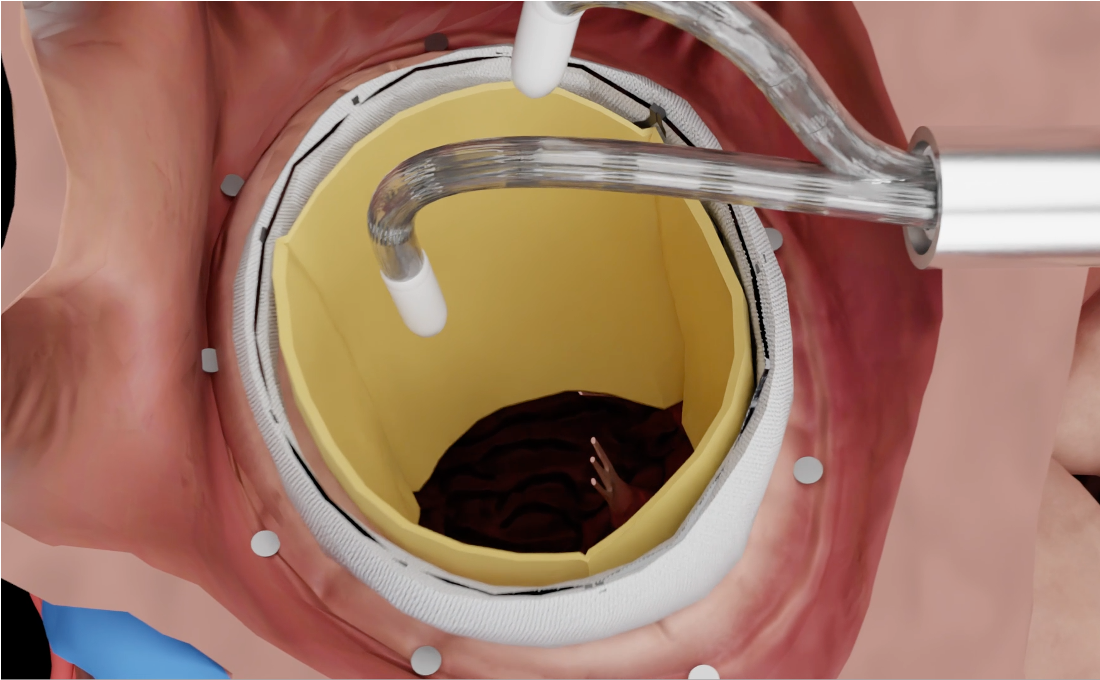
SYNCRA robotic catheter — concept render SYNCRA · Catheter Driver
SYNCRA system — concept render
Tracking Active
Scroll
Built on a foundation of
Structural Heart Robotics· Radiation-Free Navigation· Augmented Reality Guidance· AI Image Interpretation
01 — The Challenge

Structural heart disease
demands a better solution

Cardiac structural disease is among the leading causes of death worldwide. Minimally invasive surgery has advanced patient outcomes — yet critical limitations still put both patients and surgical teams at risk.

17.9M
Deaths per year globally from cardiovascular disease
~15%
Mortality and complication rates with current surgical approaches
65%
Of structural cases involve mitral valve regurgitation

Open-Heart Surgery

  • Extensive blood loss requiring transfusion and prolonged recovery
  • Long recovery time — weeks to months of post-operative care
  • High surgical risk for elderly or high-comorbidity patients

Current Minimally Invasive Approach

  • No direct vision inside the heart — surgeons operate without clear visualization
  • X-ray exposure linked to chronic occupational risk for the surgical team
  • High cognitive load from interpreting fluoroscopic images in real time
The need

A safer, more accurate, and simpler minimally invasive technology for cardiac intervention.

02 — Our Solution

Introducing SYNCRA

The SYNCRA Robotic Catheter Navigation System is a platform designed to assist trained physicians in the controlled manipulation and positioning of compatible catheters during interventional cardiac procedures.

Indicated for use in hospital catheterization laboratories and operating rooms, SYNCRA provides mechanical support and precise control of catheter movement — all under continuous physician supervision. The system does not diagnose disease, recommend therapy, or deliver energy.

System Profile
Classification

Robotic catheter navigation system for trained physicians — diagnostic and interventional endovascular procedures.

Indicated Settings
Hospital Cathlab Operating Room
Control Model

Physician-controlled at all times — mechanical support with precise, continuous operator oversight.

Regulatory Target

FDA Class II · 510(k) · Breakthrough Device Designation

01

Robotic Precision

A robotic arm delivers sub-millimeter catheter positioning — eliminating hand tremor and enabling repeatable accuracy across complex cardiac anatomies.

02

Radiation-Free

Powered by transesophageal echocardiography and magnetic field tracking — zero fluoroscopic X-ray exposure for patients and the entire surgical team.

03

Embedded Intelligence

Real-time AI image interpretation, augmented reality overlays, and patient-specific procedural planning dramatically reduce cognitive burden on surgeons.

03 — The Future

The cathlab of the future

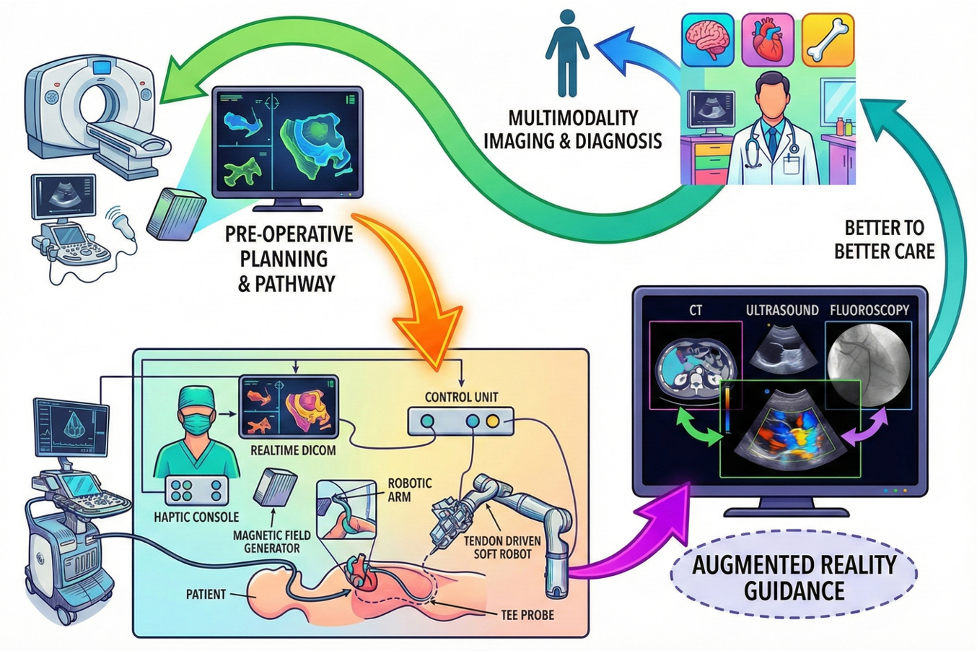
SYNCRA anchors a fully integrated procedural ecosystem — from multimodality pre-operative planning to real-time augmented reality guidance and post-procedure analytics.

Patient-side robotic system Patient Side

Patient-Side Robotic System

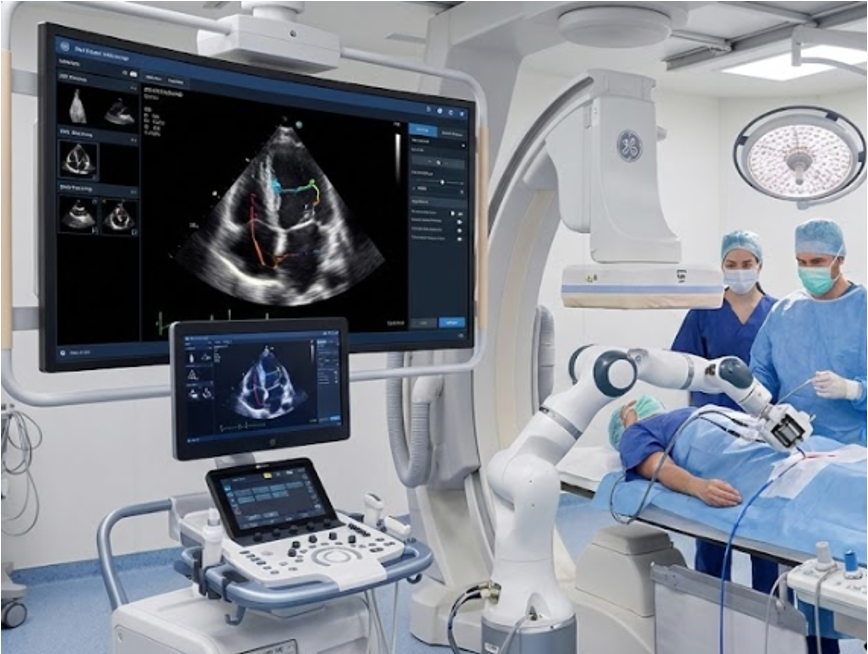
A robotic arm integrates seamlessly with ultrasound guidance at the bedside. The surgical team maintains a sterile field with no radiation exposure — making complex procedures accessible to higher-risk and older patients.

  • Robotic arm with tendon-driven soft catheter
  • TEE probe for real-time cardiac imaging
  • Magnetic field generator for instrument tracking
Surgeon console with AR guidance Surgeon Side

Surgeon Console with AR Guidance

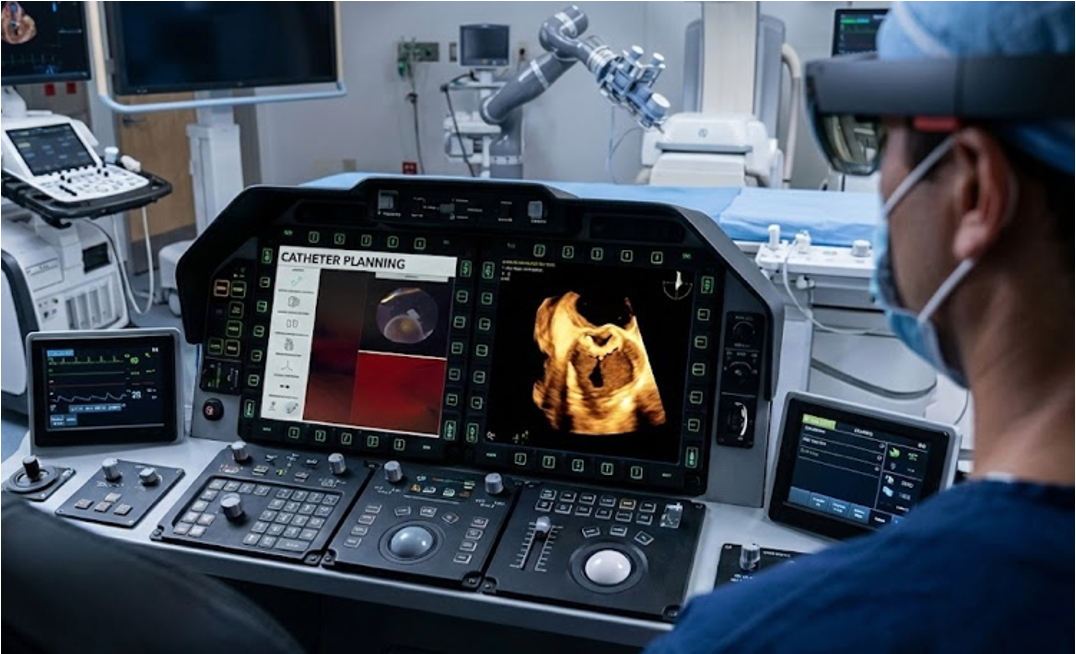
A haptic console provides intuitive force feedback combined with augmented reality visualization — giving surgeons a real-time 3D view of cardiac anatomy and live catheter position, dramatically simplifying complex navigation.

  • Haptic control console with force feedback
  • Real-time DICOM integration
  • Augmented reality 3D cardiac overlay

Multimodality Imaging

CT, ultrasound, and fluoroscopy data fused into a single procedural view for pre-operative planning and intraoperative guidance.

Intelligent Robotic Arm

Tendon-driven flexible catheter controlled by a robotic arm with magnetic field tracking for unprecedented maneuverability inside the heart.

Augmented Reality

Surgeon-facing AR display overlays procedural anatomy in real time, closing the perception gap of traditional cathlab navigation.

04 — Value Proposition

Designed to benefit everyone

SYNCRA creates measurable value across the entire cardiac care ecosystem — from the patient on the table to the health system managing throughput and clinical outcomes.

01

Patients

  • X-ray-free minimally invasive procedure
  • Patient-specific procedural planning and treatment
  • Reduced procedural risk and faster recovery
02

Surgeons

  • Significantly less cognitive and physical load
  • Enabling technology for replacing open-heart procedures
  • Protection from chronic X-ray occupational hazards
03

Hospitals

  • Better patient outcomes and lower complication rates
  • Faster patient turnover and improved cathlab utilization
  • Competitive differentiation in structural heart programs
04

Strategic Partners

  • Temporal lead in shaping the future of the cathlab
  • B2B platform technology with broad procedural applicability
  • Early access to a breakthrough-designated device ecosystem
05 — Proof of Concept

Feasibility demonstrated

Working prototypes spanning all three pillars of the SYNCRA system have been built and validated — robotic navigation, radiation-free ultrasound imaging, and augmented reality intelligence.

Robotic + Radiation-Free Prototype

A working robotic arm with TEE probe integration validated in the lab, demonstrating full catheter navigation without fluoroscopy.

Augmented Reality Interface

AR headset-based interface prototyped and tested, enabling real-time 3D visualization of catheter position within cardiac anatomy.

4 Provisional Patents Filed

IP portfolio covering robotic driver system design, catheter design & control, delivery accessories, and full system integration architecture.

Pre-Clinical Animal Study

Acute animal study completed, providing early safety and system performance data supporting regulatory pathway planning.

Patient-side robotic system
Patient Side Robotic arm with integrated TEE probe
Surgeon console with AR
Surgeon Side Haptic console with augmented reality guidance
06 — Regulatory Pathway

A clear and deliberate route
to the clinic

SYNCRA is being developed against a defined U.S. regulatory strategy, targeting a Class II device with Breakthrough Device Designation to accelerate the path toward first-in-human studies.

FDA Class II Target

Positioned as a moderate-risk device with established predicate pathways for catheter navigation systems.

510(k) Submission

Substantial-equivalence pathway leveraging cleared predicate robotic navigation platforms.

Breakthrough Device Designation

Sought to expedite review for a technology offering meaningful advantages over existing approaches.

Development Roadmap
Completed

Prototype & Pre-Clinical

Working prototypes validated; acute animal study completed; provisional IP filed.

2
Near Term

Design Freeze & Verification

System design lock, design verification & validation, and GLP pre-clinical testing.

3
Mid Term

Regulatory Submission

Breakthrough Device application and 510(k) submission to the FDA.

4
Future

First-in-Human & Launch

Clinical evaluation studies followed by phased commercial rollout via B2B licensing.

07 — Market Opportunity

A large and growing market

Structural heart disease affects tens of millions globally, concentrated in high-volume cardiac centers with the infrastructure and clinical volume to adopt next-generation robotics.

40M+
Patients worldwide with structural heart disease (2025)
1,090+
Medical centers as target commercial accounts
65%
Of structural cases involve mitral valve regurgitation — primary indication

B2B Licensing Model

SYNCRA is positioned for a B2B licensing strategy — enabling rapid commercial scale through partnerships with device manufacturers and health systems, without requiring a large direct hospital sales force at launch.

08 — Get In Touch

Ready to shape the
future together?

Whether you're a clinical partner, strategic investor, or healthcare innovator — we'd love to connect and explore how SYNCRA can transform cardiac care.

Clinical Partnerships
Collaborate on evaluation and first-in-human studies
Strategic & Industry Partners
Licensing, co-development, and integration opportunities
Based in Canada
Building the next generation of cardiac robotics